Two pipes, two owners
Here is the whole thing in one sentence. The pipe inside your flat is yours. The pipe that carries everyone’s waste down through the building is the community’s. Almost every disagreement about a plumbing bill in Calahonda comes from not knowing which of the two you are standing in front of.
Calahonda makes this sharper than most places because of how it is built: around 6,000 homes across more than 140 self-managed sub-communities, apartment-led, each with its own administration. Sitio de Calahonda, Calypso, Doña Lola, Jardines de Calahonda, Crown Resort Club. Different committees, different rules, same question.
What the community actually owns
The general rule in Spanish horizontal property law is that the community owns the elements that serve more than one property. In a practical, plumbing sense that means:
- The vertical stack draining the flats above and below you, from where it enters the building to where it leaves it.
- The supply riser feeding your flat, upstream of your own stop tap.
- Anything buried in a wall or floor slab that serves more than one unit.
- Roof drainage, communal tanks and the pump set, if the urbanisation has one.
What you own is everything downstream of those: your own traps, your branch connections, your taps, your cistern, your water heater, the waste from your sink to the point it joins the stack. Your shower gully. Your washing machine hose.
The line is not always obvious and it is not always in the same place. On a ground floor with a private garden it can be genuinely unclear, and that is when the administrator’s opinion is worth having before anyone picks up a tool.
How to tell which one you have
Two practical checks, and neither needs a plumber.
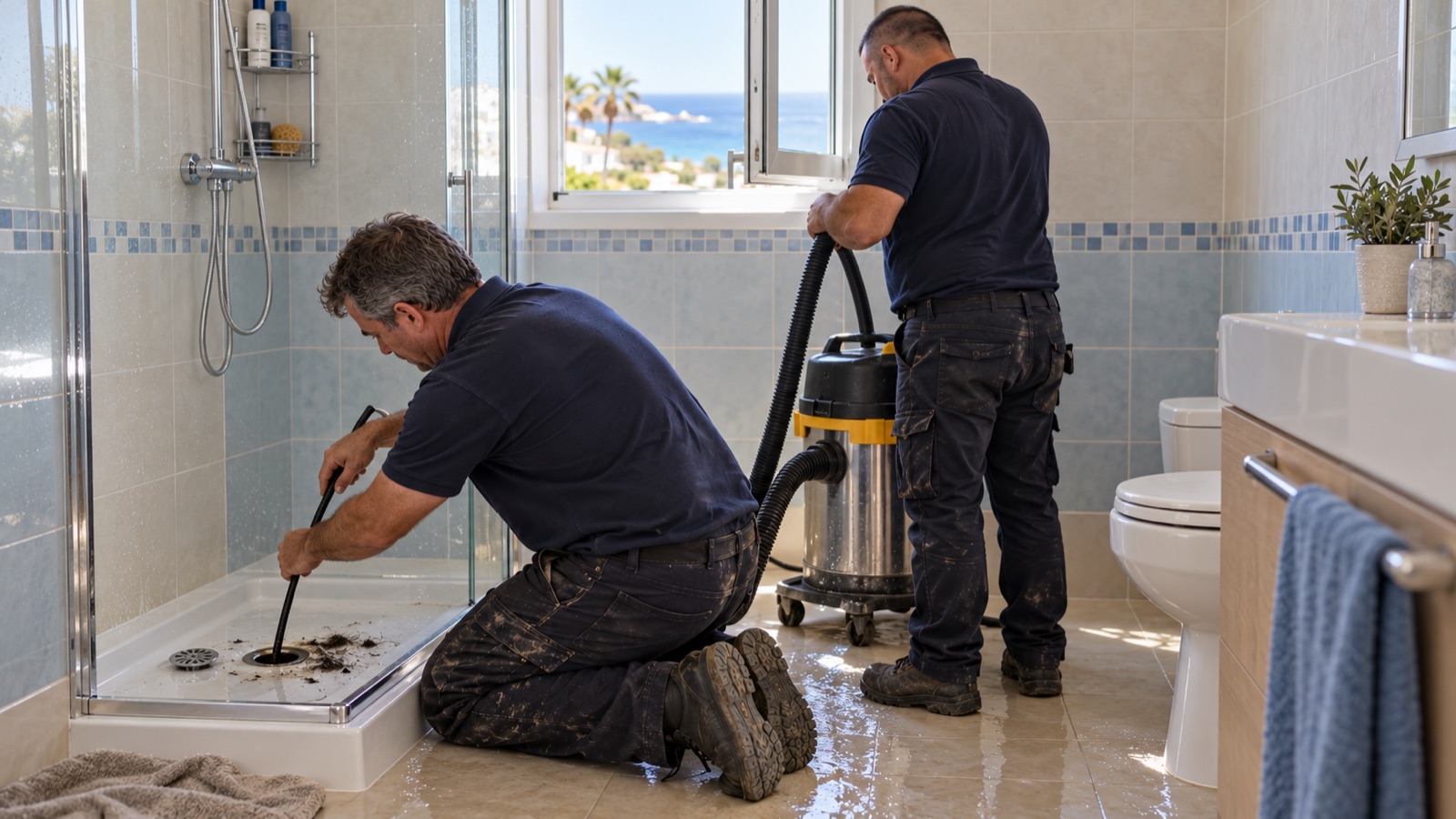
Does it happen only when you use it? If your sink backs up when you run your sink, and runs away again when you stop, the blockage is in your branch or your trap. Yours.
Does it happen when the neighbours use theirs? If your kitchen sink gurgles when the flat above has a shower, or if waste comes up in your shower when nobody in your flat has used anything, the blockage is in the shared stack. Not yours.
The second one is the test that settles most arguments, and it takes one conversation with the neighbour rather than a camera down a pipe.
Why the order of events matters
This is the part that costs people money.
If a plumber arrives, opens a wall, clears a blockage and invoices the owner, and it then turns out the blockage was in the community’s stack, the administrator is entitled to say the work was never authorised and decline to pay. The owner has already paid. That is the worst of both outcomes and it happens because nobody established whose pipe it was before the work started.
We will not start on anything that turns out to be communal without saying so first. It is not bureaucracy. It is the difference between a bill that gets paid and a dispute between neighbours that runs for a year.
At the Fuengirola edge the blocks are older and the administrations smaller, so the same conversation is shorter.
What the administrator will ask you
If it is communal, the administrator will usually want three things before authorising anything: a description of the problem, some evidence that it is affecting more than one property, and cost. That is it. It is not an unreasonable list.
The evidence is usually a message from the neighbour saying theirs is doing the same thing, plus a photograph. Two flats reporting the same fault on the same day is a far stronger case than one owner’s account, and it is much harder to defer to the next meeting.
If the blockage is severe, water is going where it should not, and the administrator cannot be reached, the pragmatic order is: stop the water, protect the property, tell the administrator what you have done and why. Nobody has ever been criticised for stopping a leak at eleven at night. Several people have been criticised for not doing it.
It is not always a blockage
Worth saying, because it changes who is responsible and what it costs.
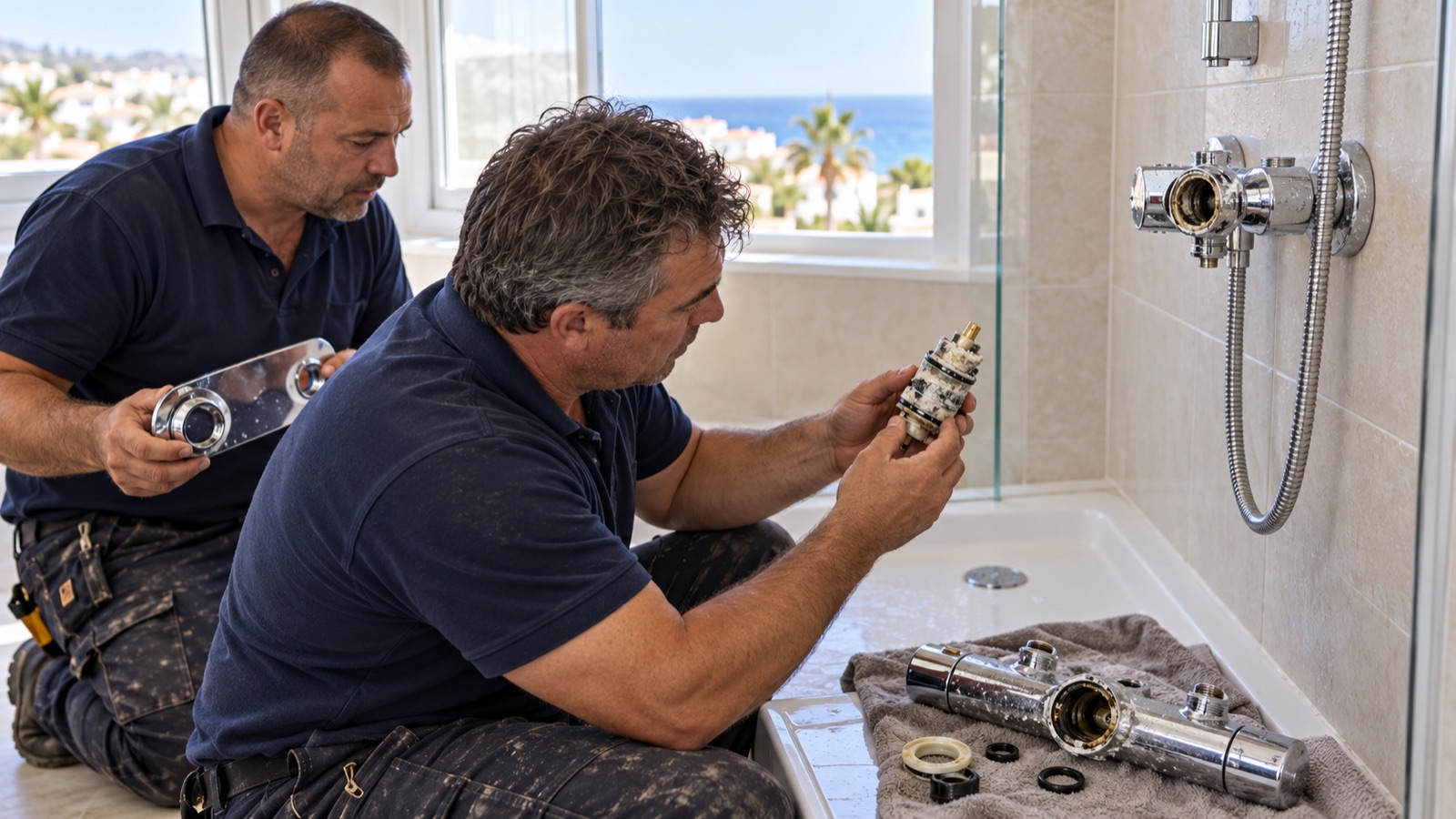
A smell in a bathroom in a block that is half empty in winter is usually a dried-out trap, and the trap is yours. A toilet that runs all night is a fill valve, and that is yours. A shower that swings hot and cold is a cartridge, and that is yours.
None of those are the community’s, and treating them as communal is how owners end up in slow correspondence over a fifteen minute job. If you are not sure, ask us which one it looks like before you escalate it.
The buildings where this comes up most
Anywhere with a shared vertical stack and ageing pipework, which is most of the older stock. Torrenueva and the Fuengirola-edge blocks have a particular version of it, because a lot of that stock is long let and holiday let at once, so nobody has a clear picture of who is using what. The larger Calahonda sub-communities have a different version: the administration is well organised, which is helpful, but decisions wait for meetings.
If you are in a block in Calahonda and something has backed up, send us a photograph of where the water is and tell us whether the neighbours have the same problem. Those two things decide almost everything about who should be paying before anyone gets a tool out of the van.