Why does the same unit last half as long here?
An electric water heater is a simple thing: a tank, an element inside it, a thermostat and a safety valve. Very little can go wrong, which is why the same model inland can sit on a wall for a very long time without anyone thinking about it.
Put it in a Calahonda apartment and the arithmetic changes. The water on this coast is hard, which is a measurement of dissolved calcium and magnesium rather than a marketing line about the area being pleasant, and that measurement has a mechanical consequence in everything that heats water.
The worst of it is in Calahonda and the older urbanisations where the supply has been running through the same pipes since the 1980s.
What scale does to an element
Heat drives calcium out of solution. It comes out as a solid and it settles on the hottest surface it can find, which inside a water heater is the element.
At first the coating is thin. The element still heats the water, but it now has to heat it through a layer of mineral, so it stays on longer and runs hotter to do the same job. The thermostat sees the water temperature and not the element temperature, so nothing switches it off early. The element quietly runs past its design temperature, every day, for years.
Two things follow. The element itself degrades faster than it should, and the extra heat goes into the tank lining as well as the water, so a tank that would have lasted decades in soft water corrodes from the inside much sooner.
That is the honest reason water heaters here have shorter lives than the same model would have elsewhere. It is also why replacing an element in a corroded tank is money that does not come back.
The three faults, and how to tell them apart
Almost every callout is one of these. They look similar from the outside and they are very different in cost.
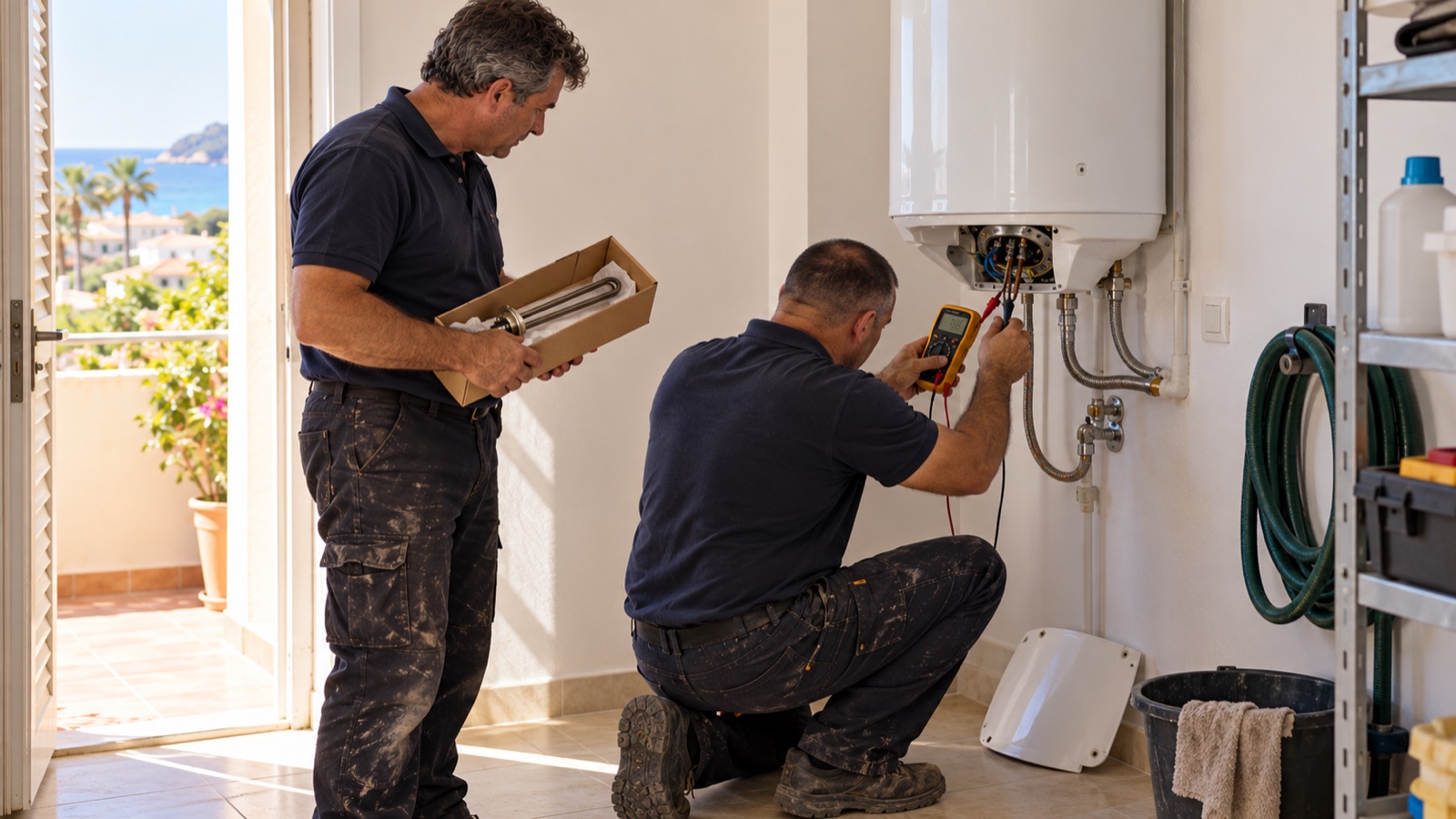
The element has failed. No hot water at all. The unit is dry underneath, nothing has tripped at the consumer unit, and the safety valve on the side is not discharging. This is the good outcome. It is a part, not an appliance, and it is usually one visit.
The thermostat has failed. The water is warm but never properly hot, or it is scalding and then cool, or the unit cuts out and comes back. Cheap to fix, and worth fixing.
The tank has corroded. Rust-coloured water from the hot tap only (if the cold runs clear, that narrows it immediately), a weep at the base, or a pressure relief valve that keeps discharging. At this point a repair is a delay rather than a fix, and the honest advice is a replacement.
There is a fourth, which is not a fault in the unit at all, and it is covered below.
Why it gets worse in August
In high summer the pressure above the coast road sags. Everyone fills a pool at once. And anything needing a minimum pressure starts to complain. That is a separate fault with its own symptoms, and it has a post of its own. If your hot water is only unreliable in August, read that one rather than replacing a unit that is fine.
What we actually see on the wall
Most of what is fitted along this stretch is electric, and much of it is Ariston. That is not a recommendation, it is what the buildings were plumbed for. It does mean the models and the parts are familiar, and that water heater repair is usually a same-week job rather than a hunt for something that fits.
Gas is rare here. If you have a gas appliance, say so at the start rather than at the end, because it is a different qualification and not one to guess at.
Before booking anything, photograph the rating plate. The make and model decides whether the element is available, whether the unit is under any manufacturer cover, and therefore whether the visit is a repair or a replacement conversation. One photo of that plate turns a wasted callout into a decision.
Repair or replace, decided honestly
Once we know which of the three it is, the rest is not a judgement call. A corroded tank is not going to be saved by a new element, however much you would prefer that answer on the day.
Where it becomes a real decision is the borderline case: an older cylinder that is still holding, with an element at the end of its life. There is no formula for that one. What we can do is say what we are looking at, say what we think will happen, and let you decide with the facts in front of you.
What is not honest is fitting an element into a tank that is nearly finished and letting the next conversation happen in a few weeks. If that is where you are, you will hear it before the spanner comes out.
The arithmetic, without hedging: a unit here gives five to eight years where the same model would give fifteen or more inland. That is the water, not the brand.
The small habits that buy years
These do not reverse damage. They slow it down, and they cost nothing.
Do not run the unit hotter than you need. The hotter the tank, the faster scale forms on the element.
Watch the recovery time instead, because it is the only warning you get here without taking anything apart. If hot water takes noticeably longer to come back after a shower than it did a year ago, scale is building on the element and it is not yet a failure. That is the point at which a repair is still cheap.
When to get someone out
No hot water and no obvious cause: ring. Water where it should not be, especially from the base of the unit or the relief pipe: ring, and turn the supply off if you can. Warm water that will not get hot: worth a visit, and worth doing before it becomes no water at all.
Tell us the make and model, whether the water is cold or merely cool, and whether the neighbours have the same problem in August. Those three answers decide most of it before anyone gets in the van.